Walk into any busy dental office at 10am and watch the front desk. The phone rings while the receptionist is checking in a patient, confirming insurance for another, and trying to reschedule the one who just no-showed. Somebody has to lose, and it is usually the caller. They get put on hold, they get sent to voicemail, or nobody picks up at all.
I have watched this happen enough times to say it plainly: the front desk is the busiest desk in your practice and the most under-appreciated. It is also the desk that decides whether your schedule stays full. A new patient who calls three offices books with the one that answers, not the one with the best reviews. That is the whole game, and most dental offices are losing it quietly, one unanswered call at a time.
That is why I wrote this. If you are shopping for an AI receptionist for your dental office, here is what to actually look for, what matters and what is marketing noise, and where the honest limits are. I run a company that builds exactly this, so take my word the way you would take a contractor's advice about hiring a contractor: useful, but notice my incentives.
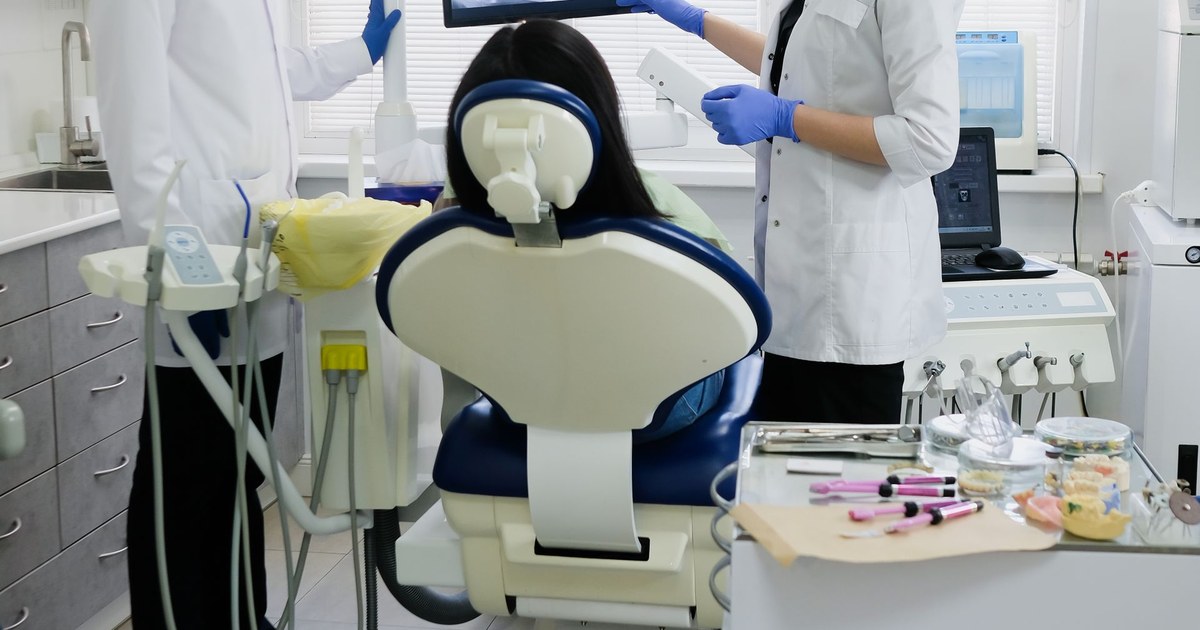
The calls that actually fill your chairs
Before the checklist, it helps to name what the phone is doing for a dental office, because it is not the same as a plumber's phone or a restaurant's phone.
New-patient calls. This is the money call. Someone with a toothache, or a family that just moved to town, or a parent looking for a pediatric dentist. They are calling two or three offices and booking with whoever makes it easy. These calls come in all day, and a surprising number come in the evening, when parents are finally done with work and remember the toothache.
Reschedules and cancellations. Your existing patients, moving things around. These calls are constant, boring, and absolutely load-bearing, because an unfilled cancellation is an empty chair you already paid for. The faster someone answers and refills it, the less it costs you.
The after-hours toothache. Dental pain does not respect office hours. Friday night, Saturday morning, Sunday afternoon: somebody is in pain and deciding whether your office or urgent care gets their loyalty. The offices that answer these calls own the relationship.
Insurance and logistics questions. Do you take my plan? Where do I park? What do I bring? Is the first visit going to cost me something? These are five-minute calls your front desk has answered a thousand times, and each one interrupts something else.
Recalls and follow-ups. The patients who were supposed to come back in six months and did not. Nobody at your front desk has time to chase them, so they drift to the office down the street.
Notice the pattern. Almost none of these calls need a dentist. Almost all of them need someone friendly, fast, and available, which is exactly what your front desk cannot be while it is also checking people in. If you want the full version of how this works for dentists specifically, I put together a page on dental appointment booking that walks through the whole setup.
What to look for: the dental-office checklist
Here is the list I would hand to a dentist friend. In order of how much they matter.
1. It books into your real schedule, with your real appointment lengths. This is the big one, and it is where most generic AI receptionists fail a dental office. A cleaning is 60 minutes. A new-patient exam is 90. A crown prep is two hours. A filling is somewhere in between, depending on how many surfaces. If the AI books everything as a 30-minute slot, your hygienist will want to strangle somebody by week two. The AI needs to know your appointment types and their real durations, and it needs to read your live calendar, not a copy of it. Ask the vendor to show you a booking for a specific procedure type on a demo call, not just "an appointment."
2. It does new-patient intake the way you do. A new patient call is not a booking call, it is an interview. Reason for visit, insurance plan, whether they have recent x-rays, how they heard about you, any anxiety or special needs worth noting for the team. A good AI receptionist collects all of this in conversation and puts it on the appointment notes, so your front desk sees a complete intake, not a name and a phone number. Ask what fields it captures and where they land.
3. After-hours coverage that sounds like your office. A huge share of the value is evenings and weekends, so do not accept a demo that only shows business-hours calls. Call the demo line at 9pm on a Saturday and see what happens. The AI should answer in your practice name, handle the toothache caller with a clear protocol (empathy, the doctor's emergency instructions, an offer to book the next available slot or reach the on-call line), and never sound like a call center reading a script.
4. It answers the questions your front desk answers fifty times a day. Hours, location, parking, which insurance plans you take, what a first visit costs, whether you see kids, where the new-patient forms are. This is pure FAQ work and it is perfect for an AI, because the answers never change and the AI never gets tired of repeating them. The thing to check: can you update the answers yourself when something changes, like your holiday hours, without filing a support ticket?
5. Reminders and recalls are built in, not bolted on. Booking is only half the job for a dental office. The other half is making sure the chair stays full: confirmation texts, day-before reminders, and the ability to text a patient back instantly when they miss your call. The best setups also handle recall outreach, pinging the patients who are overdue for their six-month cleaning. Ask whether reminders and missed-call text-back are included in the plan or sold as add-ons.
6. A clean handoff rule for the stuff it should not touch. There are calls an AI should never try to handle: clinical advice beyond your written scripts, a genuinely upset patient, anything involving pain medication. A good system has a clear escalation rule, usually "take a detailed message and alert the office immediately," and it follows it without improvising. Ask the vendor exactly what their handoff triggers are, and what happens if the AI is unsure. "I will have someone call you right back" is the right answer to uncertainty.
7. Data handling you can explain to a patient. Callers will ask, sooner or later, whether the call is recorded and where their information goes. You should be able to answer that in one sentence because the vendor gave you one sentence. Ask where recordings and transcripts live, who can see them, and how long they are kept. If the vendor gets vague here, that is a red flag no feature list can cancel out.
AI receptionist vs your other options
You already have ways to handle the phone. Here is the honest comparison.
| AI receptionist | Answering service | Another front-desk hire | |
|---|---|---|---|
| Answers after hours | Yes, 24/7 | Yes, usually | No |
| Books into your live calendar | Yes | Takes a message, you book later | Yes |
| Knows appointment types and durations | Yes, if set up right | No | Yes, after training |
| New-patient intake | Yes, to your template | Basic name and number | Yes |
| Answers insurance and logistics questions | Yes, from your FAQ | Reads a script, if you write one | Yes |
| Reminders and recall texts | Yes, automatic | No | Only if someone remembers |
| Handles two callers at once | Yes, unlimited | Yes | No, one at a time |
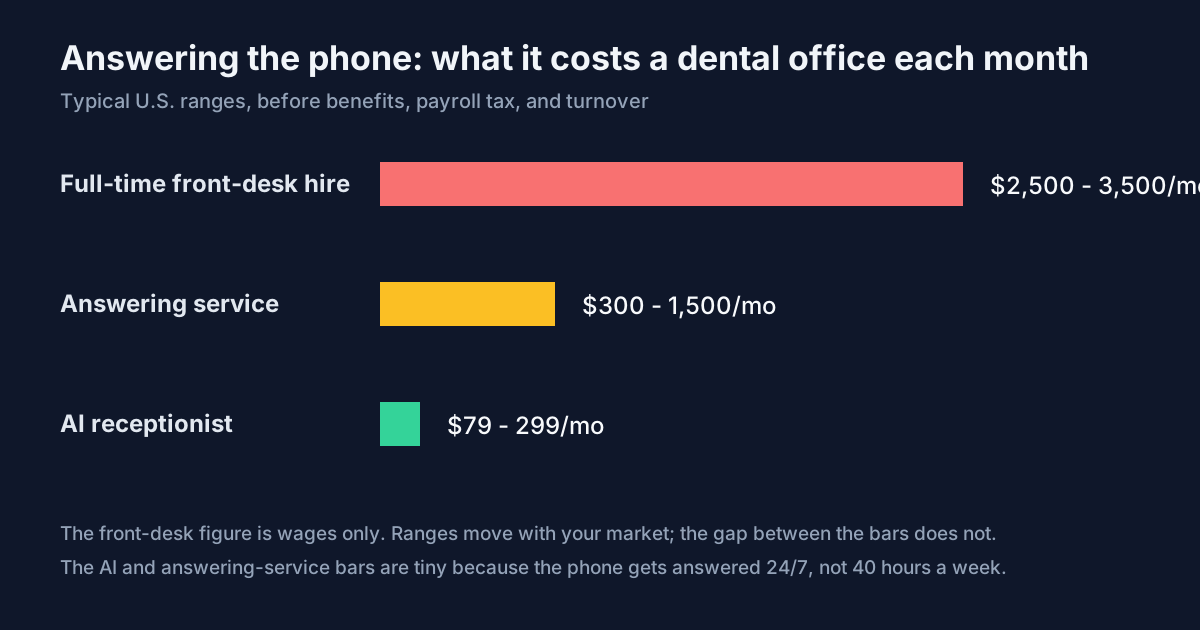
| Typical monthly cost | $79-299 | $300-1,500 | $2,500-3,500 in wages |
| Sounds like your office | Yes, trained on your scripts | Generic | Yes, eventually |
The row most offices underestimate is the second one. An answering service that takes a message at 8pm means your front desk spends the first hour of every morning playing phone tag. The new patient who called last night has already booked somewhere else by 9am. Booking directly into the calendar, in the moment, is the feature that pays for everything else.
What a good call sounds like
Abstract features are hard to judge, so here is what a Saturday-morning call should sound like. Caller: "Hi, I cracked a tooth last night and it really hurts."
A good AI receptionist: "I am so sorry, that sounds miserable. Let me help you. Are you an existing patient with us?" Caller says no. "Okay, here is what I can do. Dr. Patel keeps emergency slots open, and I have one today at 11:30 or tomorrow at 9:00. Would either of those work? Also, I will note that you are in pain so the team knows to prioritize you."
Then it takes the name, number, insurance, and what happened, books the slot, texts a confirmation with the address and parking notes, and flags the appointment as urgent in the notes. The whole thing takes three minutes. The patient hangs up relieved instead of Googling "emergency dentist near me" for another hour.
Notice what the AI did not do: diagnose anything, promise the doctor would call, or quote a price for treatment it cannot see. Empathy, logistics, booking, handoff. That is the job.
Where it still falls short, honestly
I sell this stuff, so let me tell you where it does not work, because you will find out anyway.
It cannot triage the way your lead assistant can. Your experienced front-desk person hears a voice and knows "this person needs to be seen today" versus "this can wait until Thursday." An AI follows your written protocols, and written protocols are dumber than a good human's instincts. The fix is to write better protocols and set the handoff bar low: when in doubt, the AI escalates. But do not expect it to read between the lines.
Complicated insurance conversations stay human. "Do you take my plan" is fine. "My secondary insurance has a waiting period for major work and my primary just changed" is not a phone-bot conversation. The AI should recognize the second kind and hand it to your insurance coordinator with good notes.
Some patients will always want a human. Older patients especially, and anyone who is anxious or upset. A good system does not fight this: it offers a callback from a real person without making the caller feel difficult. The goal is not to automate every call, it is to make sure no call goes unanswered. The 10% that need a human get one faster because the AI handled the other 90%.
Setup is real work, about an hour of yours. The AI needs your appointment types, durations, insurance list, emergency protocol, and FAQ answers. Nobody can skip this step, and any vendor that says "we handle everything, you do nothing" is selling you a generic bot wearing your practice name. Budget an hour, do it once, and the thing actually works. You can read how the setup works if you want the step-by-step.
Questions dentists always ask
The bottom line
A dental office does not need an AI receptionist because AI is exciting. It needs one because the phone never stops and the front desk has two hands. Every unanswered call is a patient who books somewhere else, and every interrupted check-in is a patient in your waiting room feeling ignored. Those are the two leaks, and they both come from the same place: one desk doing two jobs.
What to look for comes down to a short list. Real booking by appointment type into your live calendar. New-patient intake that lands in your notes complete. After-hours coverage you have actually tested at 9pm on a Saturday. FAQ answers you can update yourself. Reminders and recalls included, not upsold. A handoff rule for the calls it should not touch. And data handling you can explain in one sentence.
Get those seven right and the phone stops being the thing that keeps you up at night. The chairs stay full, the front desk gets to look patients in the eye again, and the Saturday toothache caller becomes your patient instead of someone else's. If you want to run your own numbers first, you can see what the plans cost and do the math against one saved new patient a month. It is a short calculation.
Ready to never miss another call?
24x7 AI answers every call on your business line, books appointments, and captures leads around the clock. Concierge setup, live in 48 hours, Plans from $79/month, including up to 250 call minutes.
See 24x7 AI in action